

Non-Surgical Shoulder Pain Treatment in Orange County
The shoulder is the most mobile joint in the body, which also makes it vulnerable to pain from injury, overuse, and age-related wear. Whether the problem is a strained rotator cuff, inflammation, or stiffness, most shoulder pain responds well to conservative care that restores motion and strength. At OC Wellness Physicians Medical Group, we help patients across our four Orange County locations understand why the shoulder hurts and which non-surgical shoulder pain treatment options may help them move freely again. Our clinical team takes a structured, diagnosis-first approach so that care is targeted to the actual source of the problem rather than a general complaint of pain.
Common Causes of Shoulder Pain
Shoulder pain arises from a range of distinct structural problems, and identifying the correct source is essential because each condition calls for a different treatment approach. Among the most common causes are rotator cuff strains and tendon irritation, which are particularly prevalent in people whose daily activities or occupational demands involve repeated overhead movement. When the tendons of the rotator cuff are repeatedly loaded without adequate recovery time, they can become irritated, partially torn, or chronically inflamed, producing pain that is often felt along the outer arm and worsens with reaching or lifting.
Impingement is another frequently encountered problem in which soft tissue structures, most often tendons or bursal tissue, become pinched between the bones of the shoulder during movement. This mechanical compression generates pain that characteristically worsens when raising the arm to the side or overhead, and it can gradually erode the integrity of the tendon if left unaddressed. Many patients describe a painful arc of motion, meaning the shoulder feels relatively comfortable at rest but becomes sharply painful through a specific range of movement.
Bursitis, or inflammation of the fluid-filled sacs that cushion the shoulder joint, can develop alongside impingement or independently following trauma, overuse, or inflammatory conditions. When the bursa becomes inflamed, even light pressure on the shoulder or gentle movement can generate significant discomfort. The pain can be difficult to localize precisely, which is one reason a clinical examination is necessary rather than relying on symptoms alone to guide care.
A distinctly different presentation is frozen shoulder, clinically known as adhesive capsulitis, in which the joint capsule thickens and contracts over time, progressively restricting range of motion in multiple directions. Patients with frozen shoulder typically notice increasing stiffness before pain becomes the dominant complaint. Recovery from this condition tends to follow a longer timeline than tendon-related problems, and treatment must account for the stage the condition has reached at the time of evaluation. Understanding which of these underlying mechanisms is driving a patient’s shoulder pain is the essential first step in building an effective treatment plan.
How Shoulder Pain Is Evaluated
A thorough evaluation is the foundation of effective pain management for any shoulder condition. At OC Wellness Physicians Medical Group, the assessment begins with a detailed history that covers how the pain started, whether onset was sudden or gradual, which specific movements aggravate or relieve it, and how the problem has changed over time. This narrative often points strongly toward a diagnosis even before a physical examination is performed, because conditions such as impingement, rotator cuff injury, and frozen shoulder each tend to present with recognizable patterns of symptom onset and progression.
The physical examination tests active and passive range of motion in all shoulder planes, assesses the strength of the rotator cuff and surrounding musculature, and applies specific provocative tests designed to reproduce the patient’s pain when certain structures are stressed. These maneuvers help the clinical team narrow the diagnosis and determine which tissues are involved. Strength deficits observed during examination can also indicate whether a tendon has been partially compromised, which influences the selection of treatment modalities.
Because the cervical spine and upper thoracic spine share nerve pathways and mechanical relationships with the shoulder, our clinical team routinely assesses the neck and upper back as part of the shoulder evaluation. Problems at the cervical level, such as disc irritation or facet joint dysfunction, can generate referred pain that is felt in the shoulder region and may be mistaken for a primary shoulder problem. Addressing only the shoulder when the neck is the actual driver of symptoms would produce incomplete results, so this broader assessment is a consistent part of the evaluation process.
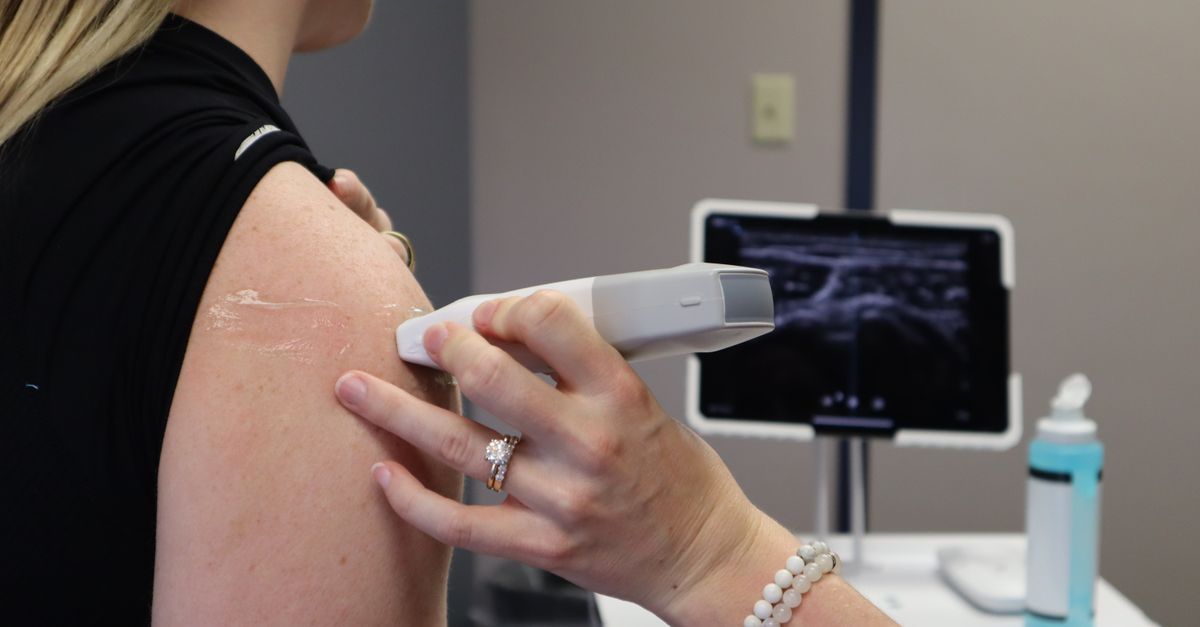
When the history and physical examination raise concern about a significant structural abnormality, such as a full-thickness tendon tear or joint space narrowing, imaging may be ordered to confirm or rule out that finding. The choice of imaging depends on what is suspected: X-rays evaluate bony alignment and joint space, while MRI or diagnostic ultrasound can visualize soft tissue structures including tendons and bursa. Imaging findings are interpreted in the context of the clinical picture rather than in isolation, since structural findings do not always correlate directly with the severity of a patient’s symptoms. A clear diagnosis established through this process directs a treatment plan that is aimed at the true source of the pain rather than the symptom alone.
Non-Surgical Shoulder Pain Treatment Options
The majority of shoulder conditions respond well to conservative, non-surgical care when treatment is properly matched to the diagnosis. Physical therapy is typically a central component of shoulder rehabilitation because restoring controlled range of motion and progressively strengthening the rotator cuff and the surrounding stabilizing muscles addresses the mechanical factors that drive most shoulder problems. A well-structured therapy program works to correct movement patterns that place excessive stress on vulnerable structures, reducing the likelihood that symptoms will return once they have resolved.

Chiropractic care can contribute meaningfully to shoulder pain treatment by addressing joint mobility and mechanical dysfunction in the neck, upper back, and the articulations of the shoulder blade itself. The shoulder does not function in isolation; it depends on coordinated movement across the cervical spine, the thoracic spine, and the scapulothoracic relationship. When mobility is restricted in any of these regions, the shoulder joint is forced to compensate, often in ways that increase loading on already-irritated tendons. Improving mechanics throughout the kinetic chain can relieve some of the burden placed on the shoulder and support the gains made in physical therapy.
Laser therapy is a non-invasive modality that may help reduce inflammation in irritated tendons and surrounding soft tissues during the acute or subacute phase of a shoulder condition. By delivering specific wavelengths of light energy to the affected tissue, laser therapy is thought to support cellular processes involved in tissue repair and may help reduce pain enough to allow patients to engage more productively in their rehabilitation exercises. It is typically used as a complement to active rehabilitation rather than as a standalone treatment.
Acupuncture offers another avenue for managing shoulder pain, particularly for patients who experience significant discomfort that limits their participation in physical therapy. By stimulating specific points associated with pain modulation, acupuncture may help reduce the intensity of shoulder pain and support the nervous system’s regulatory response to inflammation. When shoulder pain is limiting function and slowing progress through rehabilitation, acupuncture can serve as a useful adjunct that helps patients remain engaged with the broader treatment program.
For patients whose conditions involve tendon tissue or joint structures that have shown incomplete healing with standard conservative care, regenerative medicine options such as platelet-rich plasma may be considered. These approaches work by concentrating the body’s own growth factors and delivering them to the site of tissue damage, with the goal of supporting a more complete healing response. The clinical team at OC Wellness Physicians Medical Group reviews each patient’s clinical picture carefully before discussing whether a regenerative option is appropriate, and those conversations are grounded in current evidence and realistic expectations about outcomes.
When Regenerative Medicine May Help Your Shoulder
Regenerative therapies represent an evolving area of musculoskeletal care that may benefit a carefully selected group of patients with shoulder pain. Platelet-rich plasma, commonly referred to as PRP, is prepared by drawing a small sample of the patient’s own blood, concentrating the platelet fraction through centrifugation, and injecting the resulting solution into the affected tendon or joint. Because platelets carry growth factors that play a role in tissue repair, the goal of PRP therapy is to support and potentially accelerate the healing process in structures that have not recovered adequately through conservative care alone.
Regenerative options are generally considered after a patient has completed a reasonable course of physical therapy, chiropractic care, or other conservative treatments without achieving sufficient improvement. They are not typically offered as a first-line intervention, both because many patients improve with standard conservative care and because the effectiveness of regenerative therapies is greatest when the tissue environment is being actively supported through rehabilitation. Using PRP without an accompanying rehabilitation program would likely produce less durable results, so the two are planned together when regenerative treatment is pursued.
Candidacy for regenerative treatment depends on several factors, including the specific diagnosis, the degree of tissue involvement identified on imaging, the patient’s overall health, and their history of response to prior treatments. Not every shoulder condition is a suitable target for PRP, and the clinical team at OC Wellness Physicians Medical Group takes care to distinguish cases where regenerative options may add meaningful value from those where continuing or modifying conventional rehabilitation is the more appropriate path. This distinction is made through evaluation rather than assumed based on symptoms alone.
At OC Wellness Physicians Medical Group, conversations about regenerative medicine are framed around realistic expectations and current clinical evidence. Research on PRP for shoulder conditions continues to develop, and results vary across individuals and diagnoses. Patients are given an honest account of what the available evidence supports, what outcomes are plausible given their specific condition, and how regenerative treatment fits into the broader plan for their recovery. That transparency is a consistent part of how our clinical team approaches treatment planning.
How OC Wellness Treats Shoulder Pain
OC Wellness Physicians Medical Group approaches shoulder pain treatment through a physician-directed, multi-specialty model that begins with a thorough evaluation and builds outward from a confirmed diagnosis. Rather than applying a standard protocol to every patient who presents with shoulder pain, our clinical team works to identify the specific structure or structures involved, the contributing mechanical factors, and the patient’s functional goals before determining which combination of treatments is most appropriate. This individualized approach reflects the clinical reality that shoulder pain arising from rotator cuff tendinopathy requires a different treatment strategy than shoulder pain driven by cervical referral or joint stiffness.
The coordinated nature of care at OC Wellness Physicians Medical Group means that physical therapy, chiropractic care, laser therapy, acupuncture, and regenerative medicine options are available within a single integrated clinical framework rather than as separate, disconnected services. When a patient’s condition calls for more than one treatment modality, the providers involved in that patient’s care communicate to ensure that the components of the plan work together and that progress is tracked consistently. This coordination reduces the risk of redundant or conflicting interventions and allows adjustments to be made as the patient’s condition evolves.
Treatment plans are also responsive to practical factors such as a patient’s activity level, occupational demands, and recovery timeline. A patient who performs physically demanding work has different functional goals than one who primarily needs to restore comfortable range of motion for daily activities, and those differences shape the sequencing and intensity of care. Our clinical team takes the time to understand what a return to function means for each individual patient, not just what their imaging or examination findings indicate in isolation.
Care is delivered across four Orange County locations, including Westminster, Irvine, Orange, and Mission Viejo, so patients can receive consistent, coordinated treatment at a location convenient to them. Follow-up appointments are structured to monitor recovery, reassess the response to treatment, and modify the plan if progress is slower or faster than anticipated. For patients who are uncertain where to begin, a structured evaluation at OC Wellness Physicians Medical Group is the most practical first step toward understanding the cause of their shoulder pain and what can be done about it. You can learn more about our full range of services by visiting our contact page or reviewing our approach to pain management.
Frequently Asked Questions About Shoulder Pain Treatment
Can shoulder pain be treated without surgery?
Yes. Most shoulder pain, including rotator cuff irritation, impingement, and bursitis, improves with conservative care such as physical therapy, chiropractic care, laser therapy, acupuncture, and in appropriate cases regenerative options like PRP. Surgery is reserved for problems that do not respond to non-surgical treatment, and many patients achieve meaningful recovery without ever reaching that point.
What is the most common cause of shoulder pain?
Rotator cuff strains and tendon irritation are among the most common causes of shoulder pain, particularly with repeated overhead activity. Impingement, bursitis, and progressive stiffness also contribute to a significant portion of cases. An evaluation at OC Wellness Physicians Medical Group identifies the specific source so that treatment can target it accurately rather than addressing the symptom in general terms.
How long does shoulder pain take to improve?
Timelines vary considerably depending on the cause and severity of the condition. Many patients notice meaningful improvement over several weeks of consistent care when the treatment plan is well matched to their diagnosis. Stiffness-related conditions such as frozen shoulder typically follow a longer recovery arc. Your provider will set realistic expectations based on your specific diagnosis and the clinical findings from your evaluation.
Can physical therapy fix shoulder pain?
Physical therapy is highly effective for many shoulder conditions because restoring controlled motion and strengthening the rotator cuff and stabilizing muscles addresses the mechanical factors that drive most shoulder problems. It is often the central component of a shoulder rehabilitation program and is frequently combined with other modalities in a coordinated plan to achieve the best possible outcome.
Does PRP help shoulder pain?
PRP may help certain patients whose tendon or joint problems have not responded adequately to conservative care by supporting the healing process with concentrated growth factors derived from the patient’s own blood. Results vary depending on the diagnosis, the degree of tissue involvement, and individual factors. Not every patient is a suitable candidate, so an evaluation is necessary to determine whether PRP is appropriate for your specific condition.
How can OC Wellness help with shoulder pain?
OC Wellness Physicians Medical Group evaluates the cause of your shoulder pain and coordinates physical therapy, chiropractic care, laser therapy, acupuncture, and regenerative medicine across four Orange County locations. Our physician-directed clinical team builds an individualized treatment plan based on your diagnosis, activity level, and recovery goals so that care is targeted and cohesive from the start.
If shoulder pain is limiting your movement or daily function, OC Wellness Physicians Medical Group is ready to help. Call us at (714) 735-0313 to schedule an evaluation at one of our four Orange County locations. You can also reach out through our contact page to learn more about our physical therapy, chiropractic, and pain management options. Taking the first step toward a clear diagnosis is the most direct path to restoring comfortable, confident shoulder motion.