

What Does a Herniated Disc Feel Like? Symptoms, Warning Signs, and Relief
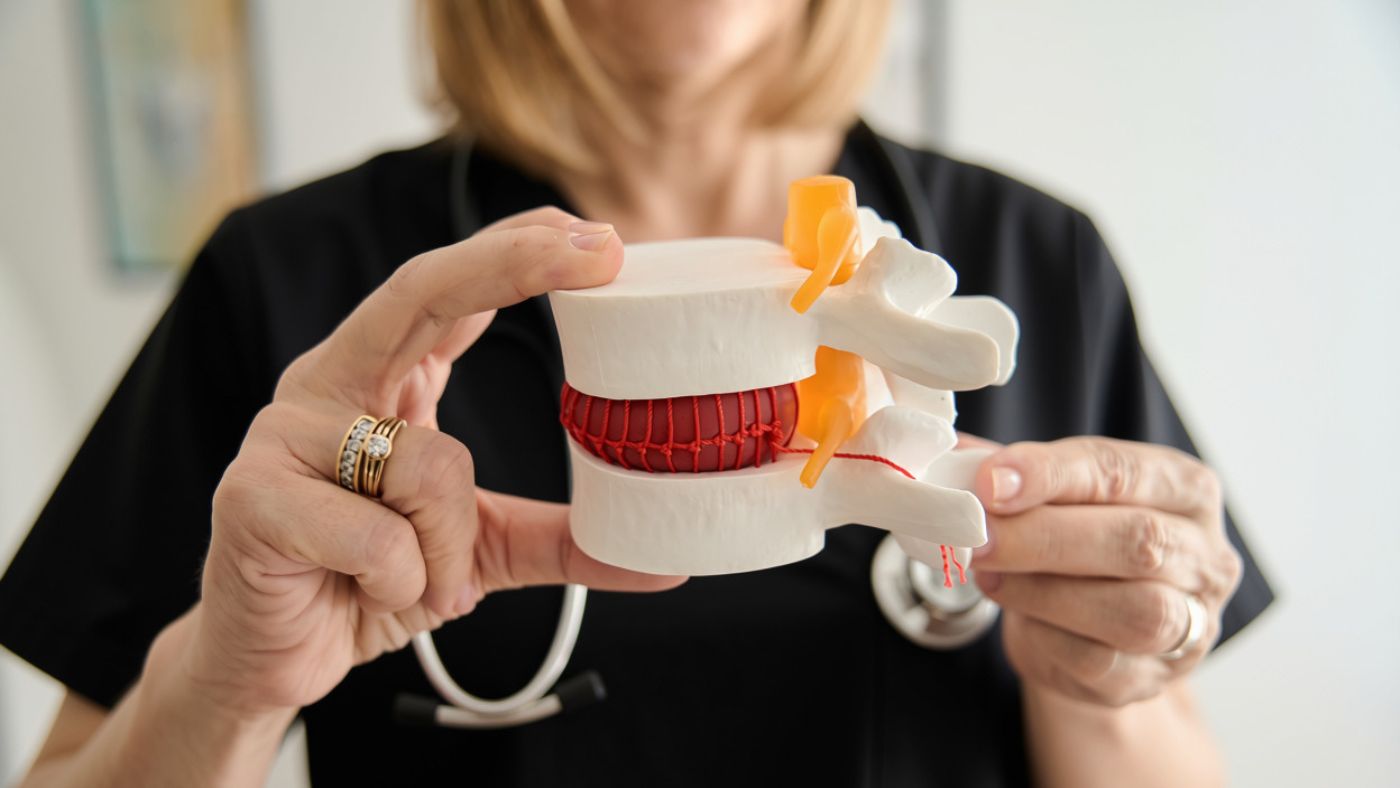
If you are wondering what a herniated disc feels like, you are likely dealing with pain that radiates, tingles, or comes and goes in ways that are hard to describe. A herniated disc happens when the soft center of a spinal disc pushes through its outer wall and irritates nearby nerves. OC Wellness Physicians Medical Group provides physician-directed evaluation and non-surgical care for herniated discs across four Orange County locations in Westminster, Irvine, Orange, and Mission Viejo.
What a Herniated Disc Actually Feels Like
One of the most distinctive features of a herniated disc is the character of the pain it produces. Many patients describe a sharp, electric, or burning sensation that travels from the spine into an arm or a leg rather than staying in one concentrated spot. This radiating quality sets herniated disc pain apart from simple muscle soreness or localized joint pain, and it often catches patients off guard because the discomfort shows up somewhere other than where the structural problem exists.
Numbness, tingling, or a pins-and-needles sensation along the path of the affected nerve is one of the most frequently reported signs. These sensations follow the nerve root as it extends outward from the spine, meaning a person may feel a buzzing or crawling sensation down the back of the thigh and into the calf without feeling much at the actual disc level. The sensation can be constant or intermittent and may shift in intensity throughout the day depending on position and activity.
Muscle weakness in the affected limb is another hallmark. Gripping a jar, lifting a bag of groceries, or walking up a flight of stairs may feel unexpectedly difficult in ways that go beyond ordinary fatigue. This weakness occurs because the compressed nerve is not transmitting motor signals efficiently, and it can progress if the irritation is left unaddressed.
Pain associated with a herniated disc typically worsens with activities that increase pressure inside the disc or along the nerve pathway. Sitting for extended periods, bending forward, coughing, or sneezing can intensify symptoms significantly. Many patients find that lying down in a comfortable position provides partial relief, while transitioning back to standing or sitting brings the pain back quickly.
It is worth noting that some patients feel very little pain directly in the back or neck and instead notice symptoms almost entirely in the limb the affected nerve serves. This pattern leads some people to initially attribute the problem to a hip issue, a leg injury, or a shoulder strain rather than the spine. A thorough clinical evaluation is essential to trace these symptoms back to their source at the disc level.
How Symptoms Differ Between the Neck and Lower Back
Where a disc herniates determines which nerves are affected and, as a result, which parts of the body experience symptoms. A herniated disc in the lower back, clinically called the lumbar spine, most commonly irritates the nerve roots that travel through the buttock, down the thigh, into the calf, and sometimes all the way to the foot. This radiating pattern is widely known as sciatica, and for many patients it is the defining feature of their experience with a lumbar herniated disc. Pain may be sharp or burning, and it often accompanies the tingling and weakness described above. Our pain management team evaluates lumbar disc conditions regularly and tailors care to the specific nerve level involved.
A herniated disc in the neck, or cervical spine, follows a different distribution. Pain, numbness, or weakness tends to spread into the shoulder, travel down the upper arm, and reach into the forearm, hand, or specific fingers depending on which disc level is affected. Patients with cervical disc herniations sometimes notice that turning the head or looking down at a screen provokes or intensifies arm symptoms, while people with lumbar herniations find that standing up from a chair or walking triggers leg discomfort.
Because the symptoms follow the nerve rather than the disc itself, the site where a patient feels the pain is not always close to where the structural problem originates. This is why a careful clinical mapping of the symptom pattern is so important before imaging is ordered. At OC Wellness Physicians Medical Group, a physician-directed exam traces the distribution of pain, numbness, and weakness to identify the most likely disc level, reducing unnecessary delays in diagnosis. You can review all of our Orange County locations to find the clinic most convenient for an initial evaluation.
Thoracic disc herniations, occurring in the mid-back region, are less common but do happen. When they do, symptoms can wrap around the torso, sometimes mimicking chest or abdominal pain, which creates its own diagnostic challenge. Regardless of spinal region, accurate localization of the affected disc level guides every subsequent step of care, from the physical exam to imaging interpretation to treatment selection.
Warning Signs That Warrant Prompt Medical Evaluation
While many herniated discs improve gradually with time and conservative care, certain symptoms indicate that professional evaluation should not be postponed. Progressive weakness in an arm or leg that is worsening rather than stabilizing is one of the clearest signals. When a nerve is under sustained compression, the motor fibers supplying the limb can be damaged in ways that become harder to reverse the longer the pressure continues. Patients who notice that their grip is getting weaker or that they are beginning to trip when walking should seek evaluation without delay.
Loss of bladder or bowel control, or numbness spreading across the groin or inner thighs, represents a medical emergency. This symptom cluster can indicate a condition called cauda equina syndrome, in which disc material compresses the bundle of nerve roots at the base of the spinal canal. Cauda equina syndrome requires urgent intervention, and anyone experiencing these symptoms should go to an emergency department immediately rather than scheduling a routine appointment.
Pain severe enough to disrupt sleep, prevent basic daily tasks, or cause a person to avoid movement out of fear of triggering a sharp episode is another reason to seek clinical input. Unmanaged pain of this intensity can lead to compensatory postures and muscle guarding that create secondary problems in adjacent joints and tissues over time. At OC Wellness Physicians Medical Group, same-day and next-day evaluations are available so patients do not have to endure worsening symptoms while waiting for an appointment.
Symptoms that persist beyond a few weeks despite rest and conservative home measures also warrant a professional assessment. While some degree of natural improvement is expected in the early weeks, ongoing symptoms that do not follow a clear trajectory of resolution benefit from imaging and a structured treatment plan. Early intervention tends to shorten recovery timelines and reduce the risk of the condition becoming chronic. You are welcome to contact our team to discuss your symptom timeline and schedule an evaluation at any of our four locations.
How OC Wellness Physicians Diagnoses a Herniated Disc
The diagnostic process at OC Wellness Physicians Medical Group begins with a thorough history and a hands-on physical examination. Our clinical team reviews how the pain began, which movements make it better or worse, and exactly where the symptoms travel throughout the limb. This information alone allows an experienced clinician to form a working hypothesis about which disc level is involved before a single imaging study is ordered.

The physical examination includes testing reflexes, strength, and sensation in specific patterns that correspond to individual nerve roots. For example, weakness in the ability to push the foot downward or upward can point to specific lumbar levels, while changes in grip strength or finger sensation can differentiate between cervical disc levels. Provocative tests, in which the examiner guides the patient through specific positions or movements designed to load the disc or stretch the nerve, help confirm which structure is generating the symptoms.
When imaging is warranted, MRI provides the most detailed view of disc morphology and the degree of nerve compression. An MRI can reveal whether disc material is bulging, protruding, or extruded, and whether the nerve root or spinal cord is directly contacted. Our clinical team interprets imaging findings in the context of the full clinical picture rather than treating a scan result in isolation, which is essential because disc abnormalities visible on MRI do not always correlate with a patient’s reported symptoms.
Distinguishing a herniated disc from other causes of radiating pain is an important part of the diagnostic process. Muscle strain, facet joint dysfunction, piriformis syndrome, and peripheral nerve entrapments can all produce symptoms that superficially resemble disc-related pain. Because OC Wellness Physicians Medical Group operates as a multi-specialty group, the diagnostic and treatment planning process unfolds within a coordinated model of care rather than requiring patients to seek referrals from multiple unconnected providers.
Non-Surgical Treatment Options at OC Wellness
The large majority of herniated disc cases improve with conservative, non-surgical care, and that is the foundation of the approach taken at OC Wellness Physicians Medical Group. Surgery is rarely the first step, and most patients achieve meaningful relief through a structured combination of therapies targeted at reducing nerve irritation and restoring normal spinal mechanics. Understanding which combination of treatments is appropriate depends on the disc level involved, the severity of nerve compression, and how long symptoms have been present.
Chiropractic care and spinal decompression are often central components of early treatment. Chiropractic adjustments address joint mobility and reduce mechanical stress on the affected disc, while spinal decompression uses carefully controlled traction to gently open disc spaces and reduce pressure on the herniated segment. Both approaches support the body’s capacity to reabsorb displaced disc material over time, a process that naturally occurs in many cases when the mechanical environment is optimized.
Once acute pain begins to ease, physical therapy plays a critical role in rebuilding the muscular support around the spine. Targeted exercises restore strength, improve flexibility, and correct postural habits that may have contributed to the herniation in the first place. Patients who complete a structured physical therapy program tend to have lower rates of recurrence compared to those who rely on passive treatment alone.
Interventional pain management options may be considered for patients whose pain is severe enough to limit participation in rehabilitation. Procedures such as epidural steroid injections can reduce inflammation around the nerve root and create a window in which a patient can engage more effectively with physical therapy. These options are evaluated on an individual basis by our clinical team, with the goal of minimizing intervention while maximizing functional recovery.
For patients whose cases may benefit from biologically based approaches, regenerative medicine options are part of the conversation at OC Wellness Physicians Medical Group. These treatments are considered when clinically appropriate and are integrated into a broader care plan rather than offered in isolation. Every treatment decision is guided by the goal of achieving durable relief through the most conservative pathway that fits the individual patient’s clinical picture.
What Does a Herniated Disc Feel Like Day to Day?
Day to day, a herniated disc often feels like a radiating pain, numbness, or tingling that travels from the spine into an arm or leg, frequently worsening when you sit, bend, cough, or sneeze. Some patients also notice weakness in the affected limb. The intensity of symptoms can vary considerably from morning to afternoon and may be influenced by sleep position, activity level, and how much time is spent in postures that load the disc. Many patients describe good days and bad days, with flare-ups tied to specific movements or prolonged positions rather than a steady, unchanging level of pain.
Can a Herniated Disc Heal on Its Own?
Many herniated discs improve over weeks to a few months with conservative care, as the body reabsorbs displaced disc material and inflammation around the nerve root settles. Research consistently shows that a significant proportion of patients experience substantial symptom reduction without surgical intervention. However, the timeline and degree of recovery vary depending on the size and location of the herniation and the overall health of the surrounding spinal structures. A physician-directed evaluation at OC Wellness Physicians Medical Group helps confirm the diagnosis and guide recovery so that symptoms do not linger unnecessarily or progress to a more complex stage.
How Is a Herniated Disc Different from a Pinched Nerve?
A herniated disc is one of the most common causes of a pinched nerve, but the two terms are not interchangeable. When disc material pushes outward and contacts or compresses a nearby nerve root, that nerve is effectively being pinched, producing the characteristic symptoms of radiating pain, numbness, and weakness. Other structural problems can also pinch a nerve without involving a disc at all. Bone spurs, thickened ligaments, and narrowing of the spinal canal can each put pressure on nerve tissue and produce similar symptom patterns. Accurate diagnosis requires a clinical evaluation that distinguishes among these possibilities rather than assuming one cause based on symptoms alone.
When Should I See a Doctor for a Herniated Disc?
You should seek a physician’s evaluation if pain is severe enough to interfere with daily function or sleep, if weakness or numbness appears to be progressing, or if symptoms persist beyond a few weeks without clear improvement. These patterns suggest that the nerve is under sustained pressure and that passive rest alone is unlikely to produce adequate recovery. As noted above, loss of bladder or bowel control or numbness in the groin or saddle region requires emergency care rather than a scheduled appointment. For all other presentations, OC Wellness Physicians Medical Group offers same-day and next-day evaluations to ensure that patients receive timely, appropriate assessment.
What Non-Surgical Treatments Help a Herniated Disc?
Non-surgical options that are commonly used in the management of herniated discs include chiropractic care, spinal decompression, physical therapy, and interventional pain management procedures. Regenerative approaches are considered when clinically appropriate and are incorporated into an individualized plan of care. The selection and sequence of treatments depend on the specific disc level affected, the severity of nerve involvement, and how the patient is responding over time. Most patients with herniated discs do improve without surgery under a consistent, physician-directed care plan, and that is the primary goal of the treatment approach at OC Wellness Physicians Medical Group.
Where Can I Get Evaluated for a Herniated Disc in Orange County?
OC Wellness Physicians Medical Group evaluates and treats herniated discs at its Westminster, Irvine, Orange, and Mission Viejo locations. Each clinic operates within a multi-specialty model that allows diagnosis and treatment to proceed in a coordinated way without requiring patients to navigate referrals to separate, unconnected providers. Whether your symptoms began after an injury, developed gradually over time, or followed an accident, our clinical team can assess your condition and outline a clear path toward relief. Visit our locations page to find the office closest to you.
If you are ready to understand what is causing your pain and begin a structured path to recovery, OC Wellness Physicians Medical Group is here to help. Call (714) 735-0313 to schedule a same-day or next-day evaluation. Our clinical team offers physician-directed, non-surgical options including chiropractic care, pain management, and regenerative medicine. We serve patients throughout Orange County from our Westminster, Irvine, Orange, and Mission Viejo offices, from evaluation through recovery.