
What to Do After a Car Accident in Orange County: A Step-by-Step Guide
Knowing what to do after a car accident is one of the most consequential things you can prepare for as a driver, because the minutes and days that follow a collision shape both your physical recovery and any injury claim that comes later. In the moments after a crash, adrenaline is high, thinking is cloudy, and it is easy to overlook steps that matter enormously in hindsight. The decisions you make at the scene, the timing of your first medical evaluation, and the records you keep afterward all combine to create a timeline that connects your injuries to the collision. OC Wellness Physicians Medical Group treats accident injuries across four Orange County locations in Westminster, Irvine, Orange, and Mission Viejo, and this step-by-step guide walks through exactly what to do after a car accident so that nothing important slips through the cracks.
The guidance here is organized in the order events actually unfold, from the scene itself through your medical evaluation, symptom documentation, and the records you will want to keep over the weeks that follow. Each step protects you twice over, once for your health and once for the strength and credibility of any claim. For a broader look at how our clinical team supports people who have been hurt in a collision, you can also visit our patient injury care page, which explains how evaluation, treatment, and documentation fit together under one coordinated plan.

What to Do After a Car Accident at the Scene
The very first priority after any collision is safety, before documentation and before anything else. If your vehicle is drivable and it is safe to do so, move it out of active traffic lanes, turn on your hazard lights, and set out warning triangles or flares if you have them. Check yourself and everyone else involved for injuries, and call 911 immediately if anyone is hurt or if vehicles are blocking the roadway. Even when a crash seems minor, requesting that police respond is worth doing, because an official report creates an independent, third-party account of what happened that can be difficult to reconstruct later.
Once the immediate situation is stable and emergency needs are addressed, the next phase of what to do after a car accident is gathering information while everything is still in place. Photograph the vehicle damage from several angles, the license plates of every car involved, the position of the vehicles relative to one another and to the road, and the broader scene including traffic signals, skid marks, and road conditions. These images capture details that memory cannot hold reliably and that are impossible to recreate once vehicles have been towed and the intersection has returned to normal.
Exchanging information is the part most people remember, but it is easy to do incompletely under stress. Collect the full name, phone number, address, insurance company, policy number, and driver’s license number of every other driver involved, and write down the make, model, and color of each vehicle. If a driver is reluctant to share details, the police report will typically capture them, which is one more reason to have officers respond. Note the date, the time, the weather, and the exact location, including the cross streets or nearest mile marker, so the context of the collision is preserved.
Witnesses can become important later, particularly if the other party disputes what happened, so collect names and phone numbers from anyone who saw the crash before they leave the scene. A neutral observer who can confirm the sequence of events often carries more weight than either driver’s account. If officers respond, write down the responding officer’s name, badge number, and the report number, and ask how and when you can obtain a copy of the official report.
Understanding what to do after a car accident starts with these first moments, because the details you capture here form the foundation of a clear record that matters as much for your medical care as it does for any claim. A thorough scene file gives every provider who treats you afterward an accurate picture of the forces involved, and it gives an adjuster or attorney the objective anchor points they need to evaluate the event fairly rather than relying on competing memories.
Get a Medical Evaluation Within 72 Hours
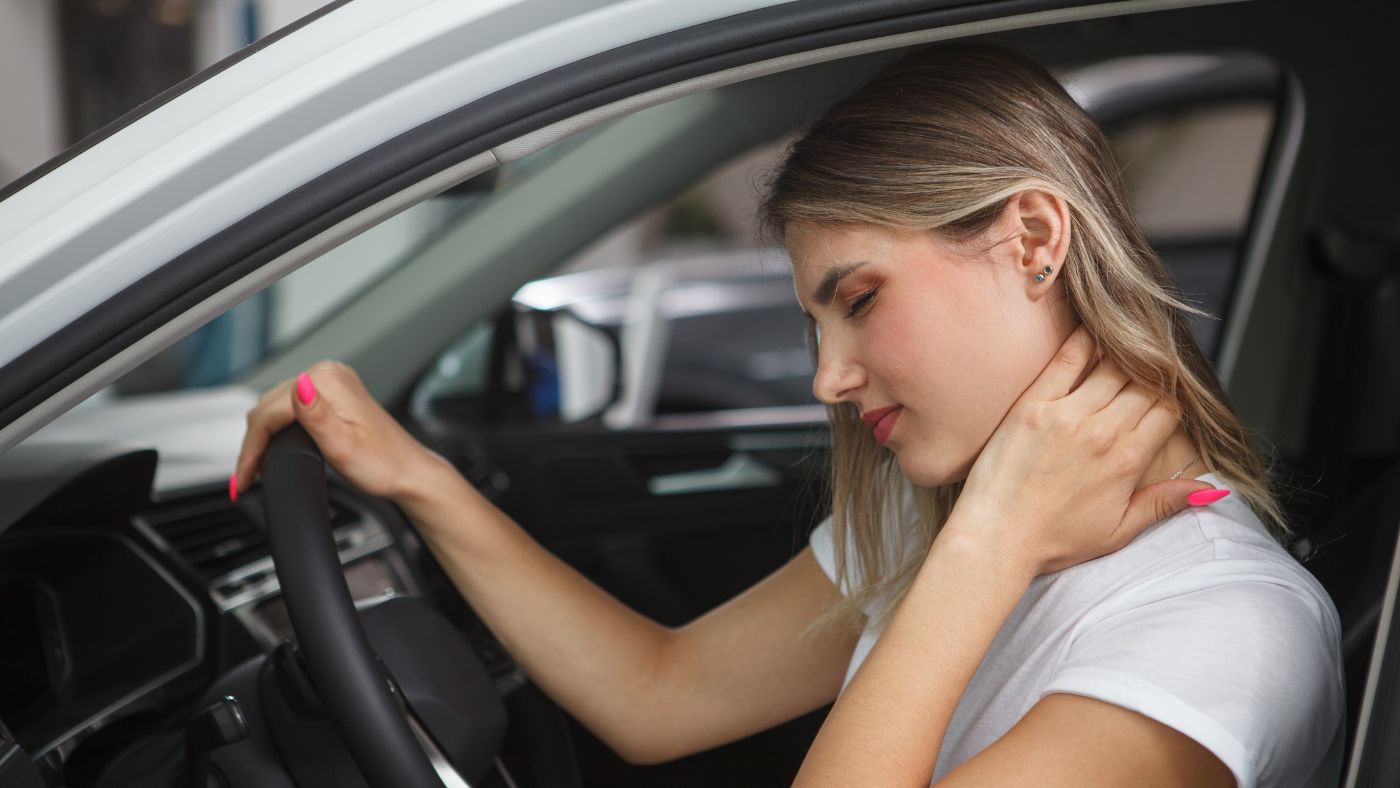
One of the most important things to do after a car accident is to be evaluated by a medical provider promptly, ideally within seventy-two hours, even if you feel relatively fine. Many collision injuries do not announce themselves at the scene. Whiplash, soft-tissue strains, concussions, and joint injuries frequently produce little or no pain in the first hours because adrenaline and the body’s stress response mask discomfort. The full extent of an injury often does not surface until a day or two later, after the initial surge of stress hormones has faded and inflammation has set in.
A prompt evaluation accomplishes two things at the same time. Clinically, it identifies injuries early, before a strained neck stiffens into something that limits your range of motion for months or before a subtle concussion goes unaddressed. From a recordkeeping standpoint, it establishes a clear, dated medical record that ties your symptoms directly to the collision while the connection is fresh and unambiguous. At OC Wellness Physicians Medical Group, our clinical team performs physician-directed evaluations that assess the neck, spine, and soft tissues, screen for concussion when the mechanism of injury warrants it, and order imaging when it is clinically indicated.
Waiting too long to seek care carries consequences that extend well beyond comfort. Insurers and defense attorneys routinely treat a gap between the accident date and the first medical visit as evidence that an injury was minor, unrelated, or exaggerated. A delay of even a week or two can become a talking point that undermines an otherwise legitimate claim. Seeing a provider quickly closes that gap and removes the argument before it can be made, which protects both your recovery and the value of any claim you may later pursue.
If you are unsure whether your symptoms justify a visit, it is safer to be evaluated and reassured than to wait and wonder. Our team can help you understand whether a condition such as whiplash may be developing, since neck and upper-back injuries are among the most common and most under-recognized outcomes of rear-impact collisions. The Mayo Clinic notes that whiplash symptoms such as stiffness, headache, and reduced range of motion can take twenty-four hours or more to appear, which is precisely why a prompt evaluation matters even when you feel uninjured at first.
Document Your Injuries and Symptoms Day by Day
After your initial evaluation, the work of documenting your recovery begins, and it is just as important as the visit itself. Start a daily symptom journal and treat it as a routine, ideally written at the same time each day. Record the location of your pain, its intensity on a zero-to-ten scale, and the presence of stiffness, headaches, dizziness, numbness, tingling, and any disruption to your sleep. Because soft-tissue injuries often evolve over several days rather than appearing all at once, a running record captures how your symptoms develop and shift over time rather than forcing you to reconstruct weeks of experience from memory later.
A useful journal goes beyond pain scores to capture function. Note how your injuries affect ordinary activities such as working at a desk, driving, lifting your children, sleeping through the night, or exercising. These functional details paint a fuller and more credible picture of how the collision has affected your daily life than a pain number alone, and they help your providers understand which limitations to prioritize in your treatment plan. If you miss work, leave early, or cannot perform certain tasks, write down the date and the reason.
Visual documentation strengthens the written record considerably. Photograph visible injuries such as bruising, swelling, and abrasions as they first appear and then again as they change, since bruises often darken and spread over several days before fading. Date each photograph, and keep them organized alongside your journal entries so the visual and written timelines align. Note every healthcare visit, the name of the provider you saw, and the treatment or imaging that was performed, so your record reflects a continuous course of care rather than a few disconnected appointments.
Accuracy and honesty matter throughout this process, because the credibility of your entire record depends on them. Be specific and truthful in every entry, and resist any temptation to exaggerate, because vague or inflated notes undermine the value of an otherwise strong and legitimate record. Consistent, detailed, and honest documentation supports both your recovery and any claim, and it helps your care team coordinate treatment across chiropractic and physical therapy without losing the details that connect each symptom to the collision.
Keep the Right Medical and Financial Records
Knowing what to do after a car accident also means staying organized over the weeks and months that follow, because clear records make a meaningful difference whenever an injury claim is involved. Keep copies of everything generated by your care: evaluation notes, imaging reports, referrals, and treatment plans from each provider you see. Request these documents as you go rather than waiting until the end, since assembling a complete file is far easier when you collect each piece as it is created instead of chasing records months later.
Financial documentation is just as important as clinical documentation, because the costs of an injury extend well beyond the doctor’s office. Retain receipts for prescriptions, braces and other medical devices, mileage to and from appointments, and any out-of-pocket expense connected to your recovery. These costs add up quietly, and a claim can only account for what you can show. A simple running log of dates, amounts, and purposes, backed by the receipts themselves, turns scattered expenses into a clear and defensible total.
Lost income is part of the financial picture as well, and it is frequently undercounted. Track every missed shift, reduced schedule, or day of limited capacity with pay stubs, a letter from your employer, or both, so the wages affected by your injuries are documented rather than estimated. If you are self-employed, keep records that show the work you could not take on or complete. Save every piece of correspondence with insurers, including claim numbers and the names of the adjusters you speak with, so the full history of your claim is preserved in one place.
There is also a legal deadline worth noting while you organize everything else. California requires drivers to file an SR-1 report with the California DMV within ten days of an accident that causes injury, death, or property damage above the state threshold, regardless of who was at fault. Missing that window can create complications unrelated to your medical care, so add it to your checklist early and confirm it has been handled.
Keeping everything together in a single physical folder or digital file ensures that nothing is lost at the moment it is needed most. If you decide to work with an attorney, an organized record makes their job dramatically easier and your case stronger from the start. Our clinical team can provide documentation directly through our attorney support process when it is requested, so your medical records flow into your claim without delay or gaps.
How OC Wellness Supports Your Recovery and Injury Record
As a multi-specialty group, OC Wellness Physicians Medical Group coordinates chiropractic, physical therapy, pain management, and diagnostic services under one documented care plan. That structure matters more than it might first appear, because a collision often produces several related injuries at once, and treating them in separate, unconnected offices tends to scatter the record. When your care is coordinated under one roof, your treatment history stays consistent and complete, which benefits both your recovery and any claim that depends on a clear picture of what happened.
Every visit contributes to that picture. Detailed, dated clinical notes from each appointment become part of a continuous treatment record that documents not only what was done but how your condition changed in response. This kind of longitudinal record is exactly what insurers and attorneys look for when they evaluate the severity and progression of an injury, and it is far more persuasive than a single snapshot in time. It also helps your own providers adjust your care intelligently as you heal, because they can see the full arc of your recovery rather than isolated moments.
Cost should not be the reason an injured person delays treatment, and at OC Wellness Physicians Medical Group it does not have to be. For qualifying personal injury patients, care can proceed on a lien basis with no upfront cost while documentation is maintained, which means you can begin the treatment you need without paying out of pocket at the time of your visit. This arrangement keeps your recovery on track and your record complete during the period when consistent care matters most.
Throughout that process, our clinical team works alongside your attorney rather than separately from them, providing records and reports promptly when they are requested so your medical care and your claim stay in sync. The goal across every step is straightforward. By knowing what to do after a car accident and acting on it without delay, you give yourself the best possible chance at both a full recovery and a well-documented claim. To begin care and start a proper injury record, call (714) 735-0313 or visit any of our four Orange County locations.
Frequently Asked Questions About Car Accident Injury Care
How soon after a car accident should I see a doctor?
As soon as possible, ideally within seventy-two hours. Many injuries such as whiplash and other soft-tissue damage do not produce symptoms immediately, because adrenaline can mask pain for hours after the crash. A prompt evaluation protects your health by catching injuries early and establishes a clear, dated medical record that links your symptoms to the collision at OC Wellness Physicians Medical Group.
What should I do first after a car accident?
First, make sure everyone is safe, move vehicles out of traffic if it is safe to do so, and call 911 if anyone is injured or vehicles are blocking the road. Then gather information at the scene, including photographs, the other driver’s details, witness contacts, and the police report number, before seeking a prompt medical evaluation.
What should I write in a car accident symptom journal?
Record the date, the location and intensity of your pain on a zero-to-ten scale, and any headaches, stiffness, dizziness, numbness, or sleep problems. Note how the injury limits work, driving, and daily activities, and update the journal every day while your symptoms persist so the record captures how they change over time.
Do I need a police report after a car accident?
A police report is valuable supporting documentation because it provides an independent, third-party account of the collision. If officers respond to the scene, request the report number while you are there so you can obtain a copy later. Having that official record removes much of the uncertainty when an injury claim is being evaluated.
What records should I keep after a car accident?
Keep photographs of the scene and your injuries, the police report, all medical notes and imaging, receipts for medical and out-of-pocket expenses, proof of lost income, and every piece of insurance correspondence. Storing all of it in one organized folder or digital file ensures nothing is missing when your claim is reviewed.
Can OC Wellness provide records for my attorney?
Yes. OC Wellness Physicians Medical Group maintains detailed, dated clinical documentation and provides records and reports to your attorney on request as part of coordinated injury care. This keeps your medical treatment and your personal injury claim aligned, so your attorney has what they need without delays.
Where can I get treated for car accident injuries in Orange County?
OC Wellness Physicians Medical Group treats accident injuries at four locations across Orange County, in Westminster, Irvine, Orange, and Mission Viejo. Call (714) 735-0313 to schedule an evaluation, and our clinical team will assess your injuries and begin a thorough treatment record.
If you have been hurt in a collision and want guidance on what to do after a car accident, contact OC Wellness Physicians Medical Group at (714) 735-0313. Our clinical team will evaluate your injuries, begin a thorough treatment record, and coordinate care across our Orange County clinics through our patient injury care and attorney support services. You can also contact us online to request an appointment.